
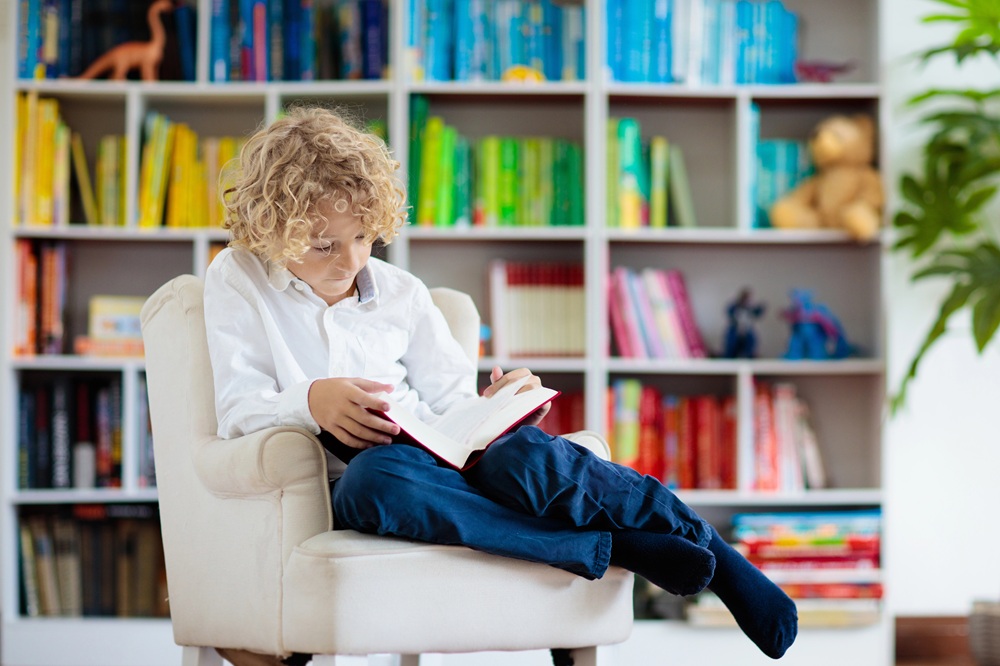
Every parent wants to give their child an edge. Some sign them up for sports. Others invest in tutors or coding camps. But one of the most powerful things you can do costs less than a streaming subscription and fits neatly on a shelf.
Building a multilingual home library is not a luxury reserved for expat families or language scholars. It is a practical, research-backed way to raise a sharper, more culturally aware child starting right at home.
Why a Multilingual Library Matters More Than You Think
Children’s brains are wired for language acquisition, especially before age ten. When kids regularly see books in multiple languages—like Spanish Bibles, French storybooks, and bilingual picture books—those languages stop feeling foreign. They start feeling familiar, even natural.
Research consistently shows that bilingual and multilingual children develop stronger problem-solving skills, better memory, and sharper attention spans compared to their monolingual peers. A home library quietly reinforces all of this during bedtime stories and lazy Sunday afternoons.
Beyond the cognitive perks, multilingual books also connect kids to their heritage. For families with roots in different countries or cultures, seeing their grandmother’s language on a bookshelf tells a child that their background has value. That message matters deeply during the years when identity is still forming.
Start With What Your Family Actually Speaks
Before buying a single book, take stock of the languages already living in your home. Maybe one parent speaks Finnish, the other speaks French, and English is the shared bridge. Or perhaps you are an English-speaking family simply raising a Spanish learner.
Your starting point shapes everything. A child learning Mandarin as a school subject needs different books than a child who hears Italian from grandparents every weekend. Think about fluency levels, too. A beginner needs picture books and simple vocabulary. An intermediate reader can handle short stories with richer sentence structures.
Do not rush to collect every language at once. Depth beats variety, especially in the early stages. Two languages done well will do far more for a child than five languages done poorly.
Choosing the Right Books at the Right Level
This is where many parents get stuck, and understandably so. The options can feel overwhelming, especially for less commonly taught languages.
Here is a simple framework to guide your selections:
- Prioritize picture books for toddlers and early readers, as visuals carry the meaning when words fall short
- Look for bilingual editions that place both languages side by side on the same page
- Choose stories where the plot is familiar, like folktales or everyday routines, so comprehension does not rely entirely on language
- Seek out books originally written in the target language rather than translated versions, since authentic texts carry the natural rhythm of that language
- Include non-fiction titles like simple science or nature books to expand vocabulary beyond conversational words
- Check the illustrator’s background when possible because culturally authentic artwork deepens the reading experience
- Use age band guides from publishers as a starting point, but trust your knowledge of your own child’s reading confidence
A good multilingual library does not have to be large. Twenty well-chosen books across two languages will serve a child better than a hundred random titles with no clear purpose.
Where to Source Multilingual Books Without Breaking the Bank
This is a practical concern for most families, and the answer is that sourcing multilingual books takes a little more creativity than walking into a local bookshop.
Online retailers like Book Depository, Amazon, and Africa-focused platforms such as Lire en Couleur carry a wide range of titles in languages beyond English. For African languages specifically, publishers like Jacaranda Books, Catalyst Press, and Storymoja are doing incredible work producing quality children’s content in Swahili, Zulu, Hausa, and more.
Libraries are underused resources. Many city and university libraries stock foreign-language sections, and librarians can often help with interlibrary loans for hard-to-find titles. Digital libraries like Epic and Worldreader also carry multilingual collections accessible from a phone or tablet.
Do not overlook your community either. Cultural associations, diaspora groups, and international schools often share or sell books at lower costs. A simple post in a parent WhatsApp group can sometimes surface a goldmine of donated books.
Organizing the Library So Kids Actually Use It
A beautiful shelf that children never touch defeats the whole purpose. Organization matters more than aesthetics here.
Keep books at eye level and within easy reach for the age group using them most. Young children are far more likely to grab a book independently when they can physically access it without asking for help. Group books by language using color-coded stickers or simple labels so kids begin to associate visual cues with each language.
Rotate titles every few weeks to keep the shelf feeling fresh. Books that have been sitting in the same spot for months tend to become invisible. A new arrangement sparks new curiosity, even if the books themselves are not new.
Create a small reading corner near the shelf if space allows. A floor cushion, a lamp, and a cozy rug transform a shelf into a destination. Children return to spaces that feel good.
Making the Books Come Alive at Home
A library only works when it is woven into daily life. This does not require structured lessons or formal reading time every day.
Read aloud in both languages during bedtime, even if your pronunciation is imperfect. Children are remarkably forgiving, and the effort signals that the language has real value in your home. Let siblings read to each other across languages. Peer reading builds confidence faster than adult-led sessions in many cases.
Connect books to real experiences. If you read a story set in Lagos or Nairobi, pull up photos, cook a meal from that region, or video call a relative who lives there. The book becomes a gateway rather than just a reading exercise.
Celebrate finishing a book in a second language. A sticker chart, a small treat, or simply making a big deal of the achievement reinforces that multilingual reading is worth the extra effort.
A Library That Grows With Your Child
The most effective multilingual home library is never finished. It evolves as your child grows, as their fluency deepens, and as new languages enter the picture.
Start small, stay intentional, and let the shelf reflect the full richness of who your child is and who they are becoming. The books you place in their hands today are quietly shaping the thinker, the communicator, and the global citizen they will grow into tomorrow.
