

If there is one thing I have learned after going through the toddler years, it is this: two-year-olds are little creatures of habit. They feel safe when they know what is coming next, and they absolutely fall apart when life feels unpredictable. Sound familiar? That is not just a coincidence. Toddlers genuinely thrive on routine because it gives them a sense of control in a world where everything still feels so big and overwhelming.
But here is the thing no one tells you before you map out a perfectly color-coded schedule: flexibility matters just as much as structure. Some days, your toddler will wake up an hour early. Some days, nap time will not happen. Some days, the best-laid plans go right out the window. And that is okay. A good routine is a guide, not a rulebook. What follows is the kind of daily rhythm that actually worked in our home, and I hope it helps yours, too.
Why a Daily Routine Matters for 2-Year-Olds
Before we dive into the schedule itself, let us talk about why having a routine in the first place makes such a big difference. Because if you are exhausted and skeptical, you deserve to know it is worth the effort.
A consistent daily routine leads to better sleep, because your toddler’s body clock gets used to winding down and waking up at the same times. It means fewer tantrums, because transitions between activities are predictable and your child is not caught off guard. It makes moving from one thing to the next so much easier, whether that is from playtime to lunch or from bath to bed. It also encourages more independent play, because your toddler starts to understand what comes next and feels secure enough to entertain themselves for stretches of time. And honestly? It reduces stress for you, too. Knowing the general shape of your day makes everything feel more manageable.
What Does a Typical 2-Year-Old Need Each Day?
Before you build a schedule, it helps to understand what your two-year-old actually needs in a 24-hour period. According to the American Academy of Pediatrics via HealthyChildren.org, keeping to a regular daily routine with consistent waking times, meal times, nap time, and play times helps children feel secure and comfortable, and makes bedtime go much more smoothly.
Here is a general breakdown of what to aim for each day:
Sleep: 11 to 14 hours total in a 24-hour period, including one afternoon nap of one to two hours.
Meals and snacks: Three balanced meals plus two snacks, spaced throughout the day to keep blood sugar stable and meltdowns at bay.
Active play: At least 60 to 90 minutes of physical movement, ideally with some time spent outdoors.
Outdoor time: Fresh air and outdoor exploration every single day if possible, even if it is just a short walk around the block.
Learning opportunities: Simple activities like puzzles, sorting games, reading books, and sensory play are naturally woven into the day.
Quiet time: A calming period before nap and before bed to help your toddler’s nervous system settle down.
Sample Daily Routine for a 2-Year-Old
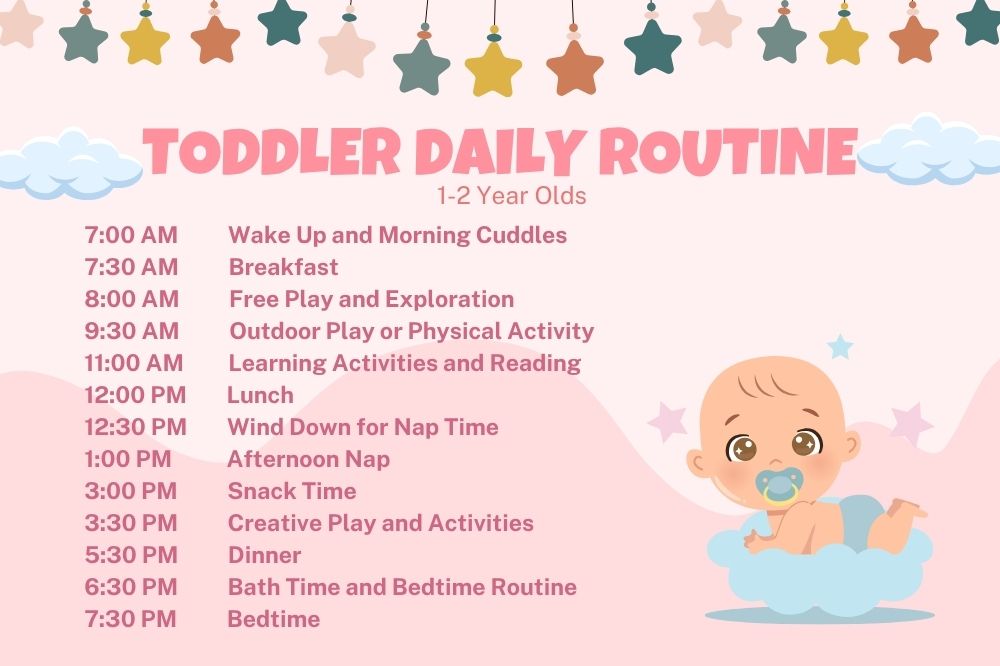
This is a general framework. Adjust the times to fit your family’s natural rhythm.
7:00 AM – Wake Up and Morning Cuddles
Start the day gently. A few minutes of cuddling in bed or some quiet time together set a calm tone and help your toddler ease into the day without feeling rushed.
7:30 AM – Breakfast
Keep breakfast simple and nutritious. Toast with peanut butter, scrambled eggs, fruit, or oatmeal are all great options. Eating at the same time each morning helps regulate your toddler’s hunger cues throughout the day.
8:00 AM – Free Play and Exploration
After breakfast, give your toddler unstructured time to play independently. This is actually one of the most important parts of the day. Free play builds creativity, problem-solving skills, and the ability to entertain themselves without needing constant direction from you.
9:30 AM – Outdoor Play or Physical Activity
Get outside if you can. A walk, time in the backyard, or a trip to the playground works wonderfully. Physical activity in the morning helps release energy and supports better nap time later on.
11:00 AM – Learning Activities and Reading
Wind down the active play and move into quieter, more focused activities. Read books together, do a simple puzzle, practice colors or shapes, or work on a basic craft. Keep it light and fun, not structured like a classroom.
12:00 PM – Lunch
Lunch is a chance to refuel after a busy morning. Aim for a balanced meal with protein, carbs, and fruits or vegetables. Eating together whenever possible makes mealtimes more enjoyable and less of a battle.
12:30 PM – Wind Down for Nap Time
Use this half hour to transition gently toward sleep. Lower the lights, put on soft music, read a short book, and let your toddler know that nap time is coming. This wind-down period makes it much easier for them to actually fall asleep.
1:00 PM – Afternoon Nap
Protect this nap with everything you have. Most two-year-olds still need one to two hours of sleep in the afternoon, and a well-rested toddler is a dramatically happier one.
3:00 PM – Snack Time
After waking up, offer a light snack to bring their energy back up. Cheese and crackers, apple slices, or yogurt are all easy options that go over well.
3:30 PM – Creative Play and Activities
This is a great time for sensory bins, painting, play-dough, building blocks, or pretend play. The afternoon stretch can be tricky energy-wise, so having an engaging activity ready helps.
5:30 PM – Dinner
Family dinner time. Even if it is a simple meal, sitting down together as much as possible makes a real difference for little ones. It is also a natural pause before the evening routine begins.
6:30 PM – Bath Time and Bedtime Routine
Bath time is a wonderful way to signal to your toddler’s body that the day is winding down. Follow it with pajamas, teeth brushing, a book or two, and some quiet snuggling.
7:30 PM – Bedtime
Aim for a consistent bedtime. Two-year-olds generally do best with a bedtime between 7:00 and 8:00 PM, which allows for the full 11 to 14 hours of recommended sleep.
Daily Routine for a 2-Year-Old Who Does Not Nap
Some two-year-olds start resisting naps, and while that is developmentally on the early side, it does happen. If your toddler consistently fights nap time, try replacing it with quiet time instead. Set up a calm space with books, soft toys, or a simple activity, and encourage your child to rest independently for 45 to 60 minutes, even if sleep does not occur. Also plan for an earlier bedtime, between 6:30 and 7:00 PM, to compensate for the lost daytime sleep. A child who skips naps but stays up until 8:30 PM will be overtired and much harder to manage by evening.
Daily Routine for a 2-Year-Old at Home
If you are a stay-at-home parent, the good news is that you have more flexibility to follow your toddler’s natural rhythm. Build independent play into the morning so you can get a few things done around the house. Involve your toddler in simple household tasks like wiping down surfaces, sorting laundry, or helping unload groceries. These feel like play to them and build real-life skills. Keep screens to a minimum and focus on hands-on, screen-free activities throughout the day to support development and reduce overstimulation.
Daily Routine for a 2-Year-Old in Daycare
If your child attends daycare, you will not have full control over the daytime schedule, and that is perfectly fine. What you can control is the morning and evening routines. Keep mornings calm and consistent so drop-off feels predictable and less stressful. In the evenings, keep things simple. A quiet dinner, bath, books, and bed. Resist the temptation to pack the evening with activities after a full day at daycare. On weekends, try to mirror daycare’s schedule as closely as possible to keep your toddler’s body clock consistent.
Best Activities to Include in a Toddler’s Daily Routine
Sensory Play: Water tables, sand, play-dough, and sensory bins are endlessly engaging and support brain development.
Reading Time: Even ten minutes of reading together every day builds vocabulary, attention span, and a love of books.
Outdoor Adventures: Nature walks, playground visits, and backyard time support physical development and emotional regulation.
Music and Movement: Dancing, singing, and simple musical instruments are joyful ways to build coordination and language skills.
Pretend Play: Playing house, doctor, or tea party supports social-emotional development and creativity.
Simple Learning Activities: Puzzles, stacking, magnetic tiles, sorting by color or shape, and basic art projects all build cognitive skills in a fun, low-pressure way.
Common Routine Mistakes Parents Make
Scheduling Every Minute: Over-scheduling leaves no room for your toddler to lead their own play and causes frustration for everyone when the plan falls apart.
Skipping Outdoor Time: It can feel easier to stay inside, but outdoor time genuinely regulates toddlers’ mood and energy in ways indoor play simply cannot replicate.
Inconsistent Bedtimes: Even a regular shift of an hour or more can disrupt your toddler’s sleep cycle and make everything harder. As Mayo Clinic points out, once you find a routine that works, following it every single night and keeping bedtime at the same time makes a significant difference in helping your child know what to expect and build healthy sleep patterns.
Too Much Screen Time: A little screen time is fine, but relying on it to fill gaps in the day tends to increase meltdowns and reduce the quality of play.
Expecting Every Day to Go Perfectly: Some days will be a mess. That is not failure. That is parenting a toddler.
Tips for Creating a Routine That Actually Works
Start With Sleep and Meals: Anchor your day around wake time, nap time, and mealtimes first. Everything else fits in around those.
Keep Expectations Realistic: A good day is not a perfect day. It is a day when your child felt safe, loved, and has enough to eat and enough rest.
Build in Flexibility: Leave buffer time between activities to avoid stressful transitions. Toddlers do not rush on command.
Follow Your Child’s Natural Rhythm: Some kids are lively in the mornings and slow in the afternoons. Others do not fully wake up until mid-morning. Observe your child and build around their energy patterns, not someone else’s template.
Adjust as Your Toddler Grows: The routine that works at 24 months will need tweaking at 30 months and again closer to three. Stay willing to evolve.
Frequently Asked Questions
What Time Should a 2-Year-Old Wake Up? Most two-year-olds naturally wake between 6:00 and 7:30 AM. If your child is waking much earlier or later, it may be worth adjusting bedtime to find a better balance.
How Much Sleep Does a 2-Year-Old Need? Between 11 and 14 hours total in a 24-hour period, including one daytime nap.
Should a 2-Year-Old Still Take a Nap? Most two-year-olds still benefit greatly from a nap. Dropping naps completely before age three is on the early side, though it does happen. If naps are resisted, try quiet time as an alternative.
How Much Screen Time Is Appropriate for a 2-Year-Old? No more than one hour per day of high-quality, age-appropriate content, and always with a parent nearby to watch and interact along with them.
What If My Toddler Resists the Routine? Give it time. It can take two to three weeks of consistency before a routine truly clicks. Stay calm, stay consistent, and offer transition warnings like “five more minutes and then we eat lunch” to help your toddler adjust.
The Best Routine Is the One That Works for Your Family
At the end of the day, there is no perfect toddler schedule. There is only the one that helps your child feel safe, rested, and loved, and the one that keeps you sane enough to show up for them day after day. Consistency matters far more than perfection. Even a loosely followed routine is better than no rhythm at all.
So take this as a starting point, not a rigid prescription. Try it, tweak it, and give yourself grace when it falls apart. You know your child better than any schedule ever will. Trust yourself, trust your toddler, and remember that the messy, imperfect days are part of it too. You are doing a great job.