
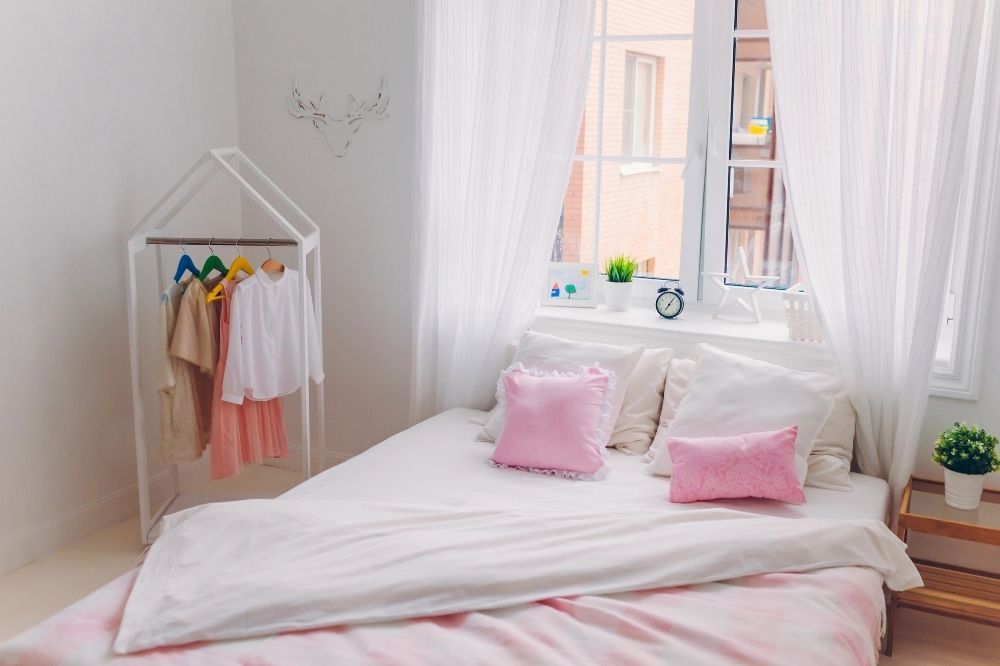
It’s 10 p.m. The laundry has colonized the chair. Your nightstand holds a phone charger, three hair ties, and a cup from Tuesday, and the overhead light makes the whole room look like a dentist’s waiting area. You scroll past a gorgeous “budget” bedroom makeover, then to the fine print, where you learn the budget was $1,400.
So here’s a different kind of plan: seventy-five dollars, one weekend, and a specific order for doing things, because the order is what most of those roundup posts leave out.
Here’s the short version: a bedroom looks “done” because of four things, not forty. Intentional lighting, one wall or surface with a point of view, a bed that looks finished, and a room that isn’t buried in stuff. All four can be done for under $75 if you spend in the right sequence, and one of those dollars should go to a safety item most decorating posts never mention.
The Myth: A Good-Looking Bedroom Takes a Big Budget
It’s the most common reason people never start. The rooms in your feed are styled by people who receive furniture sent to them, are photographed in perfect light, and are cropped to hide the pile on the other side of the bed.
What actually separates a room that looks pulled together from one that doesn’t is mostly free. Design pros who were handed a $200 budget by HGTV kept coming back to the same moves: rearrange what you own, pull side tables from elsewhere in the house, add layered lighting beyond the overhead fixture, paint one wall, hang art you love, and spend the cash on a few textiles. One designer’s whole “mini makeover” plan cost about $100 for bedding and about $100 for accessories, with the furniture swaps free.
The second myth is that you have to paint everything. You don’t, and you shouldn’t on a tight budget. Painting one wall (usually the one behind the bed) gives you most of the effect for a fraction of the paint.
Why It Feels Worse Than It Is
Bedrooms are where everything ends up. It’s the room guests don’t see, so it gets the leftovers: the broken lamp, the bin of off-season clothes, the art you never hung. By the time you’re tired enough to care, the room has been accumulating for years, and “redecorating” feels like a project the size of a renovation.
It isn’t. It’s mostly an editing job, followed by a few well-chosen purchases. And there’s a bonus: you’re more likely to keep it that way when you’ve deliberately chosen every item.
The $75 Budget, Line by Line
These are planning estimates for a typical bedroom, not store quotes, so treat them as ceilings and check your local prices. Thrift stock varies by week, which is part of the fun and the risk.
| Step | What you’re buying | Plan on |
| Declutter, rearrange, clean windows | Nothing | $0 |
| Accent wall | Sample pot to test, then one quart of paint | $18 |
| Paint supplies | Mini roller, small tray, painter’s tape (borrow if you can) | $7 |
| Lighting | Two warm-white LED bulbs, plus a thrifted lamp | $10 |
| Wall art | Thrifted frames, plus things you already own | $8 |
| Bed | Two pillow covers and a thrifted throw | $16 |
| Safety | Furniture anchor kit for the dresser | $8 |
| Greenery | One pothos or snake plant | $4 |
| Total | $71 |
That leaves about $4 for tax and the inevitable second roll of tape. If you find a bargain and come in under budget, the “next dollar” list near the end tells you where to spend the difference.
The Right Order (This Is the Whole Trick)
Most budget posts hand you a pile of ideas in random order, which is how you end up with a gorgeous new throw pillow on a bed shoved against a wall you were going to paint. Do it in this order, and nothing gets done twice.
1. Clear the room first (free, 1 to 2 hours). Remove everything from surfaces, strip the nightstands, and take out anything that doesn’t belong in a bedroom: laundry baskets, work stuff, the toy that migrated. Sort into keep, donate, and “belongs elsewhere,” and don’t move to step two until the room holds only what you’ll put back.
A quick note on the research, because you’ll see it quoted everywhere: a 2015 conference study from St. Lawrence University found that people at risk of hoarding disorder reported worse sleep. That’s a small online sample of a very specific group, and it’s correlation, not proof that ordinary mess wrecks your sleep. So don’t declutter because a study scared you. Do it because you can’t style a surface that’s buried and because it’s free.
2. Rearrange before you buy anything (for free). If a layout works better, pull the bed off whatever wall it’s glued to, and try your furniture in different spots. Swap nightstands, dressers, or lamps with other rooms. A bedroom with the same footprint for six years often just needs the bed moved eight inches or the dresser switched to another wall.
3. Wash the windows and the ceiling light (free). Cleaning the glass changes how a room feels more than almost anything in the budget, and it makes your chosen colors read more accurately.
4. Paint the accent wall (about $25 with supplies). Order or buy a sample pot first, then put it on the actual wall for a few days, because paint swatches look different under different bulbs. Then use a quart for the wall behind the bed.
Quick math if you want to go further: one gallon covers roughly 350 to 400 square feet, so a quart covers about 90 to 100. That’s enough for an accent wall in most bedrooms. Flat paint typically costs about $25 to $60 per gallon, according to current cost guides. A full-room job in a typical 12-by-12 bedroom takes a bit over a gallon once you add about 10 percent for touch-ups. Do the accent wall now, and if you love it, you can finish the rest later.
Pick something calm and a little moodier than you might expect: a soft sage, a dusty blue, or a warm greige. Light colors make a room feel larger, but a broader accent behind the bed adds the “designed” look that flat white never will.
5. Fix the lighting (about $10). An overhead light alone flattens a room. Add at least two other light sources at different heights: a table lamp on a dresser, a lamp beside the bed, or a plug-in sconce if you rent. Use warm-white bulbs (the box says around 2700K).
This isn’t just a style choice. The Sleep Foundation notes that evening light at 10 lux or higher is linked to more nighttime awakenings and less deep sleep, and recommends keeping bedroom light low, especially if you read in bed. A lamp with a warm bulb is both prettier and kinder to your sleep than the overhead fixture.
6. Hang the art and add a mirror if you have one (about $8). Thrift stores are the best source for inexpensive frames, and they cost about the same whether they hold art or your kid’s drawings. Frame what you already own: postcards, a fabric scrap, a page from a book, a kid’s painting, or a map of somewhere you love. Hang pieces slightly higher than feels natural, with the center around 57 inches off the floor, and group a few together instead of scattering single pieces.
If you have a mirror anywhere in the house, move it to where it catches window light. HGTV’s design experts praised mirrors for adding depth and bouncing light around, and a mirror across from the window is the closest thing to a free square-footage upgrade.
7. Dress the bed last (about $16). This is where the room finally looks finished, and it’s the cheapest way to make it look expensive. Keep a calm base (white or a single neutral), then layer: two new pillow covers in a texture or color pulled from your accent wall, plus a thrifted throw at the foot. Pillow covers are cheaper than new pillows, and you can swap them seasonally.
If your sheets are tired, a trick from HGTV’s designer panel is to sew two flat sheets together to make a duvet cover, which they priced at around $100 total, including pillowcases and a throw. It’s a good move when you have a few extra dollars, but it won’t fit in a $75 plan, so I’ve left it for the upgrade list.
8. Style the nightstands and dresser (free). Now put things back, but only the things that earn a spot: a lamp, a book you’re actually reading, a small dish for rings and earbuds, and a plant. Leave empty space on purpose. The top of a nightstand should look like someone could set down a glass of water.
The Safety Item That Doesn’t Look Like Decor
If there is a child under about six in your home, spend $8 here before spending a dollar on throw pillows. The U.S. Consumer Product Safety Commission counted 459 child deaths from TV, furniture, and appliance tip-overs between 2000 and 2018, and 93 percent of them were children 5 and younger. Roughly 11,000 children were treated in emergency rooms for tip-over injuries each year between 2016 and 2018.
When you rearrange furniture, you often change how it sits, and a freshly moved dresser is unanchored. Anchor kits are inexpensive and take about 15 minutes with a stud finder and a drill. The CPSC’s other advice is just as useful in a redecorated room: put heavier items in the lower drawers and keep remotes and toys off the top of furniture where a kid might climb to reach them.
Stop Signs Before You Paint
Check these before you open the paint can:
Your home was built before 1978. Paint from before the federal ban may contain lead, and the EPA warns that sanding and scraping can create dangerous dust and chips, even beneath newer layers. Assume lead is present unless a certified inspector says otherwise. Skip any sanding or scraping, and call the National Lead Information Center at 1-800-424-5323 if you need guidance.
You’re pregnant or planning to become pregnant. Ask your provider about painting and ventilation before you start, and have someone else do the work if possible.
The wall has water stains, peeling, or mold. Paint over it, and it comes back. Find the leak first.
You rent. Check your lease. Many landlords allow painting, and removable wallpaper or a large piece of art behind the bed does a similar job if they don’t.
Sleep Details Worth a Few Minutes
You’re already in the room, so a few sleep-friendly tweaks cost almost nothing. The Sleep Foundation reports that many experts recommend about 65 degrees Fahrenheit for sleep, along with a quiet, dark room. If street noise is the issue, a fan or a white noise machine does the job. Wash bedding at least every two weeks to reduce dust mites.
None of that requires a purchase, but it’s why “cozy bedroom” and “good sleep environment” overlap more than you might expect.
Where the Next Dollars Should Go
If you find an additional $20 in the budget, buy these in this order:
Blackout curtains or a blackout liner. The Sleep Foundation recommends a dark room, and blocking street and morning light also makes the space feel intentional.
A bigger rug. A rug that sits under the bed and extends past the sides makes the whole room look larger and hides worn floors.
A DIY duvet cover from two flat sheets, as above.
New hardware on a dresser or nightstand. Swapping knobs takes a screwdriver and ten minutes, making old furniture look newer.
Wall molding or a painted ceiling: the HGTV panel’s suggested move for architectural interest without a renovation.
What to Do This Weekend
Saturday morning: clear the room, rearrange, wash the windows, and test your paint sample. Saturday afternoon: paint the accent wall, then let it dry while you hit one thrift store for a lamp, a throw, and frames. Sunday: anchor the dresser, hang the art, change the bulbs, dress the bed, and put back only what you love.
You won’t have a showroom. You’ll have a room that’s calmer, brighter, safer, and noticeably more yours than it was on Friday, for the price of a takeout order.
Frequently Asked Questions
How much does it cost to decorate a bedroom on a budget?
You can make a visible difference for about $75 by rearranging what you own, painting one accent wall, upgrading the lighting, and adding a few textiles. A more complete refresh with new bedding, curtains, and a rug typically costs closer to $200.
What’s the most affordable way to make a bedroom look better?
Declutter, rearrange the furniture, and clean the windows. All three are free. After that, painting is usually the highest-impact purchase per dollar.
Should I paint the whole room or just one wall?
On a tight budget, one wall. A quart covers roughly 90 to 100 square feet, which is about one accent wall. You can add more later if you like the result.
What color is best for a bedroom?
Soft, low-contrast colors such as sage, dusty blue, and warm neutrals tend to feel calming. Test a sample on your wall and view it in morning and evening light before committing.
How can I make a bedroom feel cozy without spending money?
Use lamps with warm bulbs instead of the overhead light, layer the blankets and pillows you already own, and clear the surfaces. Moving a mirror to catch window light helps, too.
Do I need to anchor my dresser if I move it?
Yes, especially with young kids at home. Moving furniture can change how it sits, and the CPSC recommends anchoring dressers, bookcases, and TVs to the wall.
